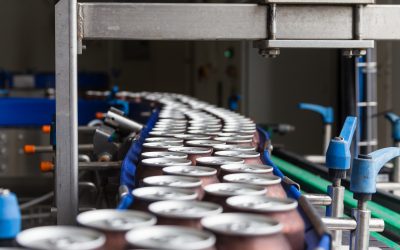
Whether you are a craft brewery looking to start canning your beer, or a new pet food brand looking to get your brand out to market, you’ll need to know that your production runs smoothly and getting your canning process on point plays a big part of that. In this blog we spill the beans on how to make sure you have the right can Seamer for your business.
So firstly what is a Seamer?
A can seaming machine, generally referred to as a Seamer is a machine specifically designed to hermetically seal the individual components of a can together. This process, called seaming, helps to keep your product fresh & free from contamination in a tamper-proof, and fully recyclable container.
Cans are available in various materials to suit the needs of industries including the food, beverage, pharmaceutical, cosmetic & chemical sectors. Regardless of the industry sector, there is a can & Seamer to suit your requirements.
A range of differing Seamers are available, so when deciding which type of machine is right for your business, you need to weigh up the following aspects.
Your product type
Seamers are typically designed to close specific product groups within a range of can sizes, so choosing a machine with your product in mind is important. For example, a drinks manufacturer will need a different Seamer compared to a manufacturer of powdered products, and a manufacturer of individual consumer size cans, will require a different Seamer than a manufacturer of catering size cans.
Your particular product can even dictate the shape of the can and the style of Seamer you require. For instance, smaller consumer-sized round cans are better suited to higher speed rotary Seamers, while irregular cans – rectangular, oval, oblong etc – are generally closed on slower rotary or stationery can Seamers.
Crucially, when choosing a Seamer, consider what your end-users want from your product, and make sure the seamer can fulfil these needs.
Speed and output
Seamers vary widely in design and range from single head manually operated machines suited to product trials or very low volume output, to a high speed 18 head Seamer designed for high-speed high-volume output.
Generally speaking, the more heads a Seamer has, the faster the output.
Think about what level of speed and output is important to your business and choose a Seamer accordingly. Don’t just think about what your current business needs are, but consider how these might change in the future and purchase a Seamer that can adapt to your needs as your business alters or grows. Think also about how the Seamer can be integrated or hooked up with other elements of the production process
Budget
As with any business investment, set aside a budget for your Seamer. Always opt for the best quality you can afford to ensure good value and durability from your choice. Factor in maintenance costs and any potential repairs that may be needed down the line. You don’t necessarily always need to purchase new, in some cases, you may be able to find a factory reconditioned model that happily fulfils your requirements.
It’s also worth checking the warranty of the machine and reading reviews of different models.
Size and space
Seamers come in all different shapes and sizes, so it’s important to weigh up how much space you’ve got at your facility, and choose a machine that fits this accordingly. As well as room for the machine, you’ll need extra space for other things such as pallets and a holding area for the products.
Customer support
When picking the right can seamer for your business, it’s also worth choosing a supplier who can provide you with the right training, support and maintenance as and when you need it. A specialist supplier should also be able to offer you impartial advice prior to purchase to help you make an informed decision.
For any questions you may have about your Commercial Canning production, please get in touch with one of our Canning Experts who can advise you on the best practice. Call us on 01905 958324 or email info@psangelus.uk.com